

Key Takeaways
Coinbase received final OCC approval on November 6, allowing it to operate as a federally chartered national trust bank.
The new entity will focus on institutional digital asset custody but cannot accept retail deposits, issue stablecoins or provide traditional loans.
Coinbase plans to transfer its existing custody business to the federal entity over three years, strengthening its position in the institutional market.
What Coinbase’s New Banking Charter Means for Its Business
Coinbase has received final approval from the US Office of the Comptroller of the Currency (OCC) to operate as a nationally chartered trust bank. The approval is an important development for the digital asset exchange, allowing it to bring its institutional bitcoin custody business under direct federal supervision.
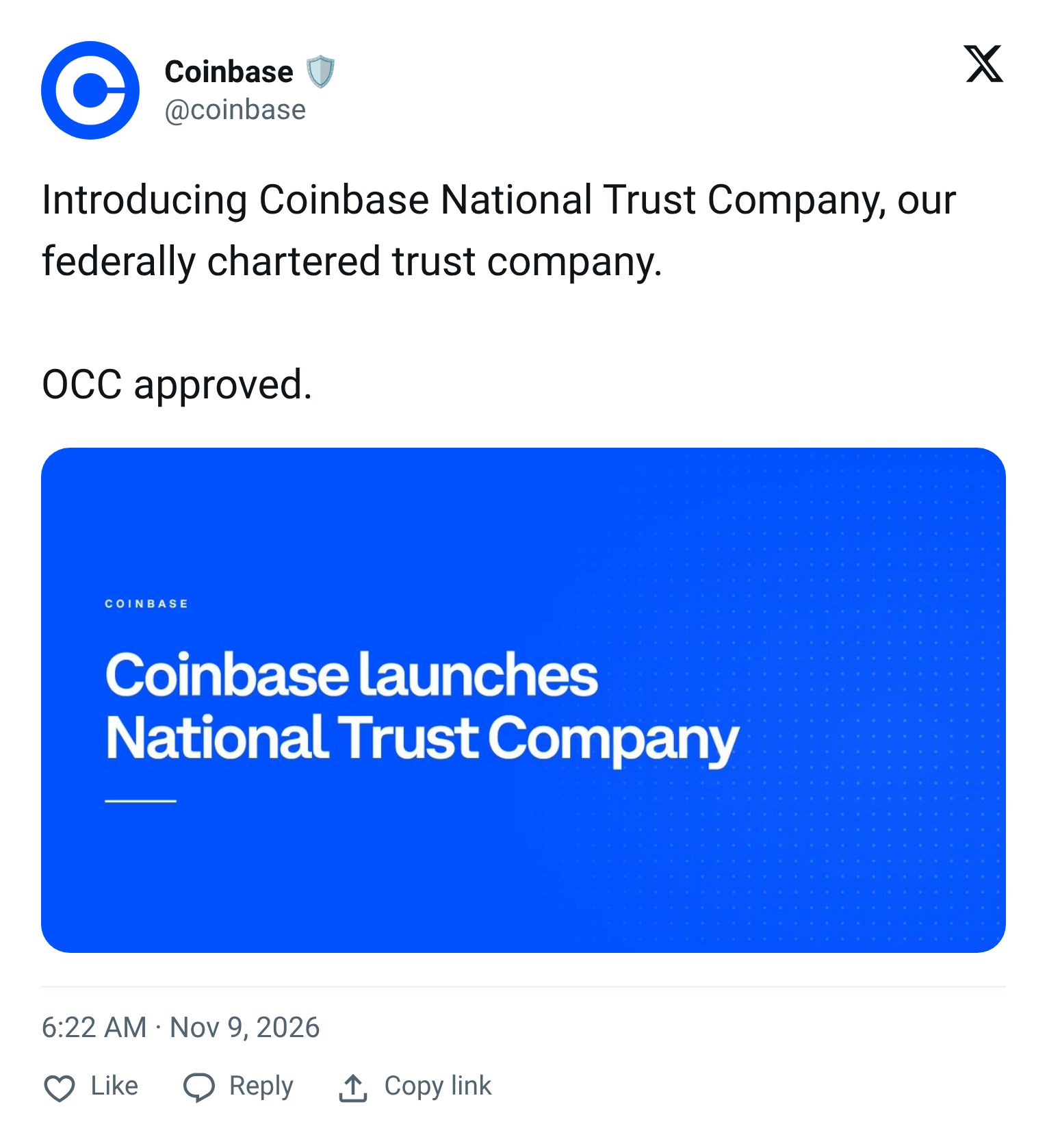
The decision upgrades the conditional approval Coinbase received in April 2026, following several months of regulatory reviews and preparations. According to the OCC's licensing records, the approval process was completed on November 6. Coinbase announced the news on November 9.

Website of the OCC
The company first applied for the charter in October 2025. Since receiving conditional approval, it has worked to strengthen its compliance systems, hire new employees and meet the regulator's requirements.
The new charter allows Coinbase National Trust Company to provide federally regulated digital asset custody services.
Before this announcement, Coinbase already had permission from New York State to operate its digital asset custody business and serve major institutional clients. However, it operated primarily under state-level regulatory oversight.
Now, this new approval allows it to operate as a federally chartered national trust company.
This gives Coinbase a consistent federal regulatory framework, potentially making nationwide expansion easier, increasing credibility with major financial institutions, and creating opportunities to offer additional financial services in the future, including payment and stablecoin-related services.
In short, Coinbase isn't gaining the ability to do something entirely new today; it's gaining federal recognition and a stronger foundation for future growth.
In simple terms, custody means holding and protecting digital assets on behalf of customers. These services are particularly important for large investors, financial institutions and companies that need secure ways to store their bitcoin holdings.
Coinbase has provided regulated custody services since 2018 through its New York-regulated subsidiary. The new federal charter will allow the company to bring these activities under the supervision of a national banking regulator.
Coinbase plans to gradually move its existing custody business to the new federal entity over the next three years. The company believes the approval will strengthen its position in the institutional bitcoin market and make it easier to work with traditional financial institutions.
Although Coinbase has received a national trust bank charter, this does not mean it can operate like a regular commercial bank. The institution cannot accept ordinary deposits from retail customers or provide traditional loans. It also does not have permission to issue stablecoins directly.
Instead, its main focus will be holding and managing digital assets for institutional customers. Some other services, including staking, prime trading and financing, will continue to be handled by Coinbase's other business units rather than the new trust bank itself.
The OCC has also established financial requirements for the new institution. Coinbase National Trust Company must maintain at least $60 million in Tier 1 capital and enough liquid assets to cover 180 days of operating expenses during its first three years.
The charter also does not automatically give Coinbase access to Federal Reserve payment systems. The company would need separate approval to use those systems. Rick Schonberg, CEO of Coinbase National Trust Company and the exchange's head of trading and custody, welcomed the additional regulatory supervision.
Speaking about the approval, Schonberg said regulators could make the company's services stronger and improve the security of customer assets. He also explained that Coinbase planned to begin with its core custody services before expanding into other variations of the business model.
Coinbase is joining a growing group of digital asset companies seeking to operate under federal banking supervision. Other companies, including BitGo, Paxos and Fidelity Digital Assets, have also pursued similar federal banking licenses.
Not everyone supports the OCC's decision to give digital asset companies access to federal trust bank charters. The Independent Community Bankers of America (ICBA) has challenged the regulator's approach, arguing that these companies should not receive banking privileges without meeting the same requirements as traditional banks.
The organization has also questioned whether the OCC has the authority to approve certain activities through national trust charters.
Traditional banks have additional concerns about stablecoins. They fear that digital asset companies offering rewards to stablecoin holders could attract money away from ordinary bank deposits.
These disagreements have created growing tensions between the traditional banking industry and the emerging digital asset sector.


