

Key Takeaways
Liquid Network has restored 1:1 Bitcoin backing for all LBTC tokens, with reserves exceeding 4,275 BTC.
Blockstream funded the reserve recovery after an exploit drained nearly 4,000 BTC from the network in September.
Users can swap BTC and LBTC through providers such as SideSwap, but direct federation withdrawals remain restricted.
Liquid Network Replenished Its Bitcoin Reserves
The Liquid Network has fully restored the bitcoin reserves backing its LBTC tokens, nearly two months after a software bug allowed an attacker to withdraw almost 4,000 BTC, worth around $320 million at the time.
The Liquid Federation, which operates the Bitcoin sidechain, confirmed that its reserves are back to a 1:1 ratio. This means every LBTC in circulation is now backed by one bitcoin held in reserve.
However, the recovery does not mean everything is back to normal. While users can once again swap BTC and LBTC through participating providers, direct withdrawals from the federation remain restricted.
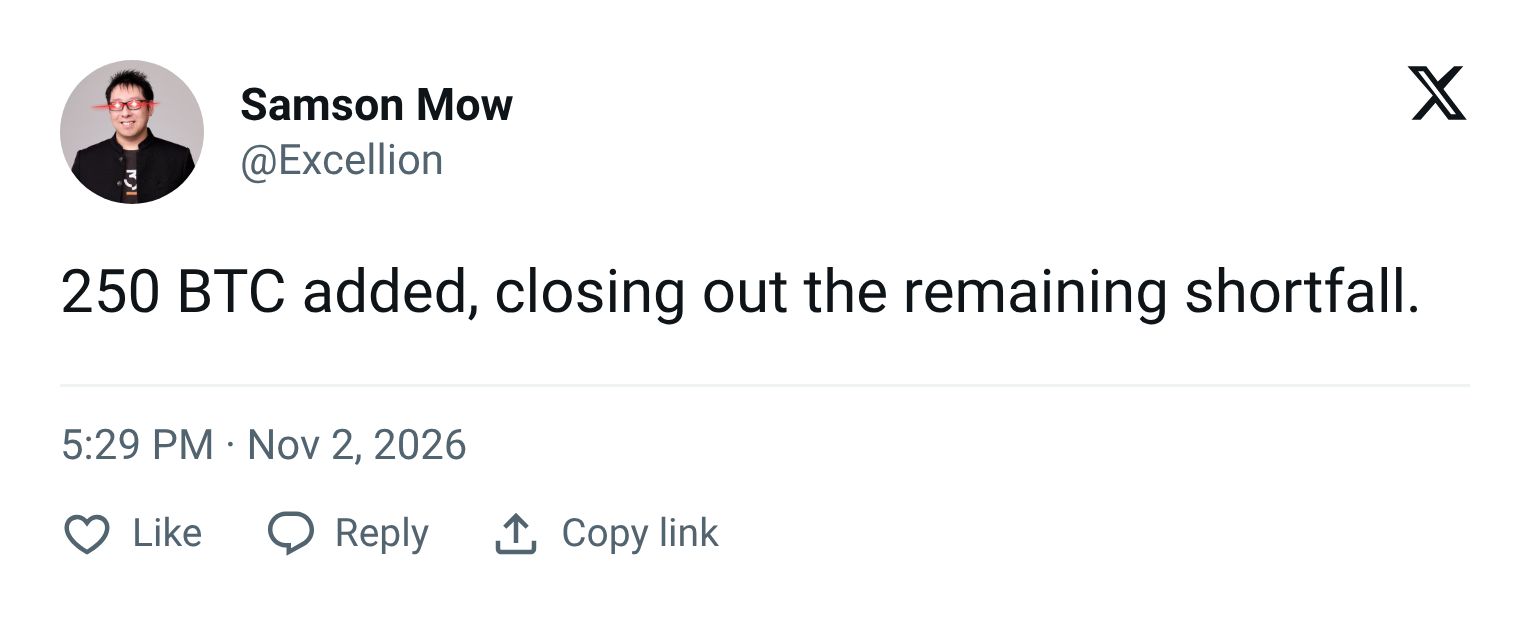
In its announcement, the federation said its bitcoin reserves were "fully restored, reestablishing 1:1 BTC backing for all LBTC." The final deposits needed to close the reserve shortfall arrived on November 2.
They included transfers of 300 BTC and 250 BTC.
According to SideSwap, its November 3 update showed 4,270.54 BTC in reserves backing an equal amount of LBTC in circulation. Later figures from Liquid.Network show the reserves were slightly increased to 4275.49 BTC, surpassing the 100% mark.

Reserve figures from Liquid.Network
The incident began on September 6, when a bug in Elements, the open-source software behind Liquid, allowed an attacker to create around 4,000 LBTC without depositing any bitcoin.
The attacker then used these newly created tokens to withdraw real BTC through SideSwap, a Liquid Federation member authorized to process withdrawals.
As a result, Liquid's bitcoin reserves fell from approximately 4,205 BTC to just 197 BTC. The network temporarily halted operations while developers investigated the problem and worked on a fix.
On September 7, the attacker returned 3,400 BTC after communicating with Blockstream through messages recorded on the Bitcoin blockchain. The individuals behind the attack described themselves as white-hat hackers. However, they kept the remaining bitcoin, leaving approximately 598 BTC unrecovered.
Blockstream refused to pay a ransom for the missing funds, saying that taking bitcoin without permission and refusing to return it was theft, not responsible security research.
Although the federation confirmed that its reserves had been restored, it did not initially explain where the replacement bitcoin came from.
Several deposits were made into the federation's reserve wallet during the recovery period. These included transfers of 50 BTC, 300 BTC and 250 BTC, as well as smaller deposits.
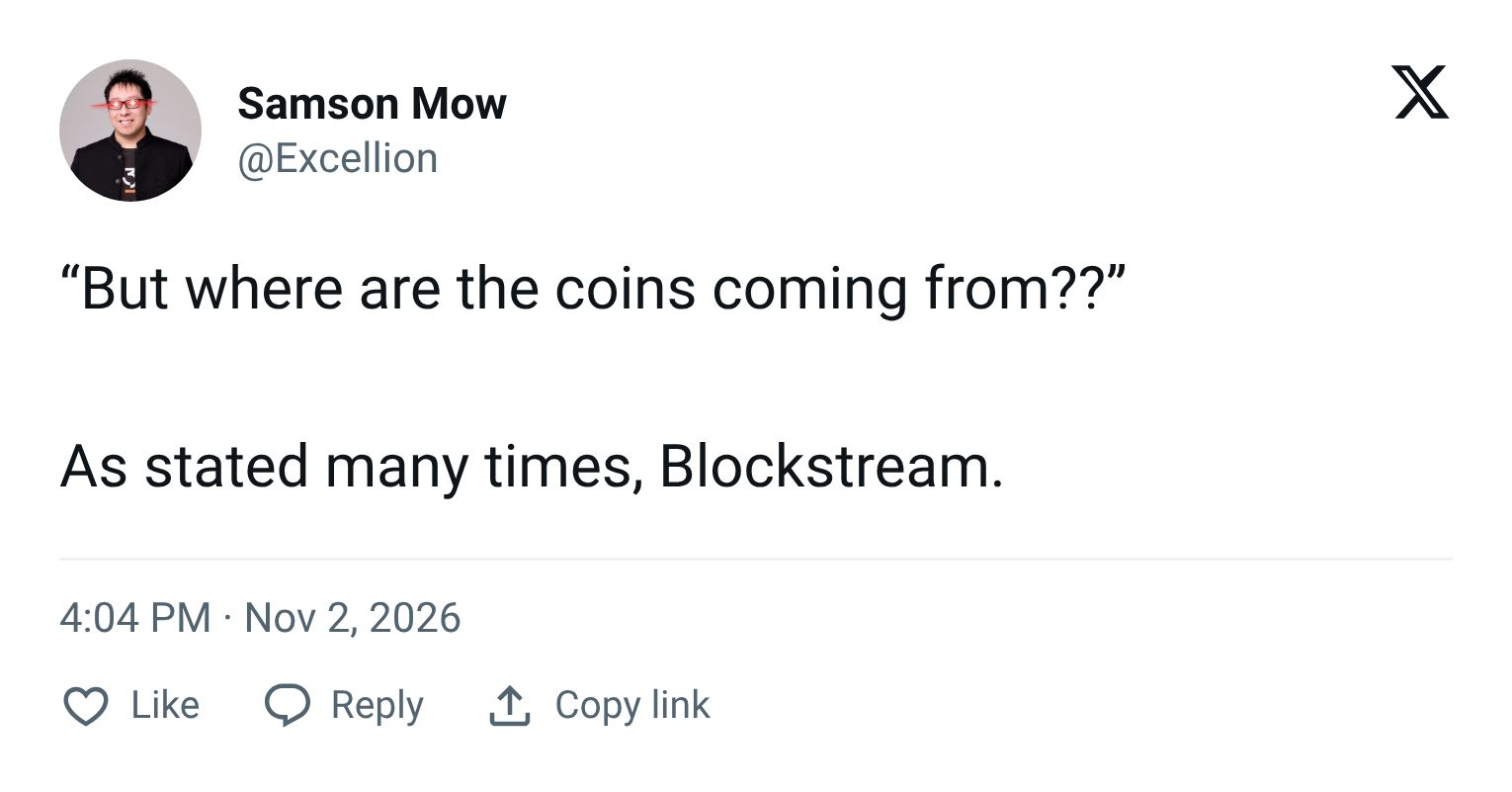
Samson Mow, founder of JAN3 and a member of the Liquid Federation's board, identified Blockstream as the source of the replacement funds. When asked where the funding came from on X, Mow replied: "As stated many times, Blockstream."
Blockstream is the company behind Liquid's core technology.
However, the federation has not published a detailed breakdown of the funding or confirmed whether other members also contributed bitcoin. While blockchain records show that the reserves have been replenished, they do not independently establish who owned every wallet involved in the transfers.
The restoration of the reserves is an important step, but users still face some limitations when converting LBTC back into BTC.
The federation restored BTC-to-LBTC and LBTC-to-BTC swaps through participating providers in October. SideSwap reopened its conversion service on October 20, allowing customers to exchange LBTC for bitcoin at a 1:1 rate, minus its standard 0.1% fee.
However, there is an important difference between using SideSwap and withdrawing bitcoin directly from the federation.
SideSwap currently pays customers from its own bitcoin wallet rather than withdrawing BTC directly from the federation's reserves. This means withdrawals can sometimes be delayed. If SideSwap runs low on bitcoin, customer orders may have to wait until its wallet is replenished.
The company says it processes queued orders in the order they arrive once new bitcoin becomes available. However, it does not provide a guaranteed payment time.
Direct withdrawals from the federation, known as peg-outs, remain restricted while additional security and operational requirements are completed. The federation has not announced a date for their full return.
“For most users accessing Liquid through supported swap providers, this will restore a practical means of converting LBTC to BTC, even while direct Federation peg-outs remain restricted,” Federation stated in its announcement.
Following the exploit, Blockstream released software fixes and introduced additional security measures to reduce the risk of another incident.
Blockstream CEO Adam Back said several parts of the network's security had been strengthened. These changes include updating withdrawal authorization keys, storing them in cold hardware wallets and improving the rules that help Liquid nodes verify transactions.
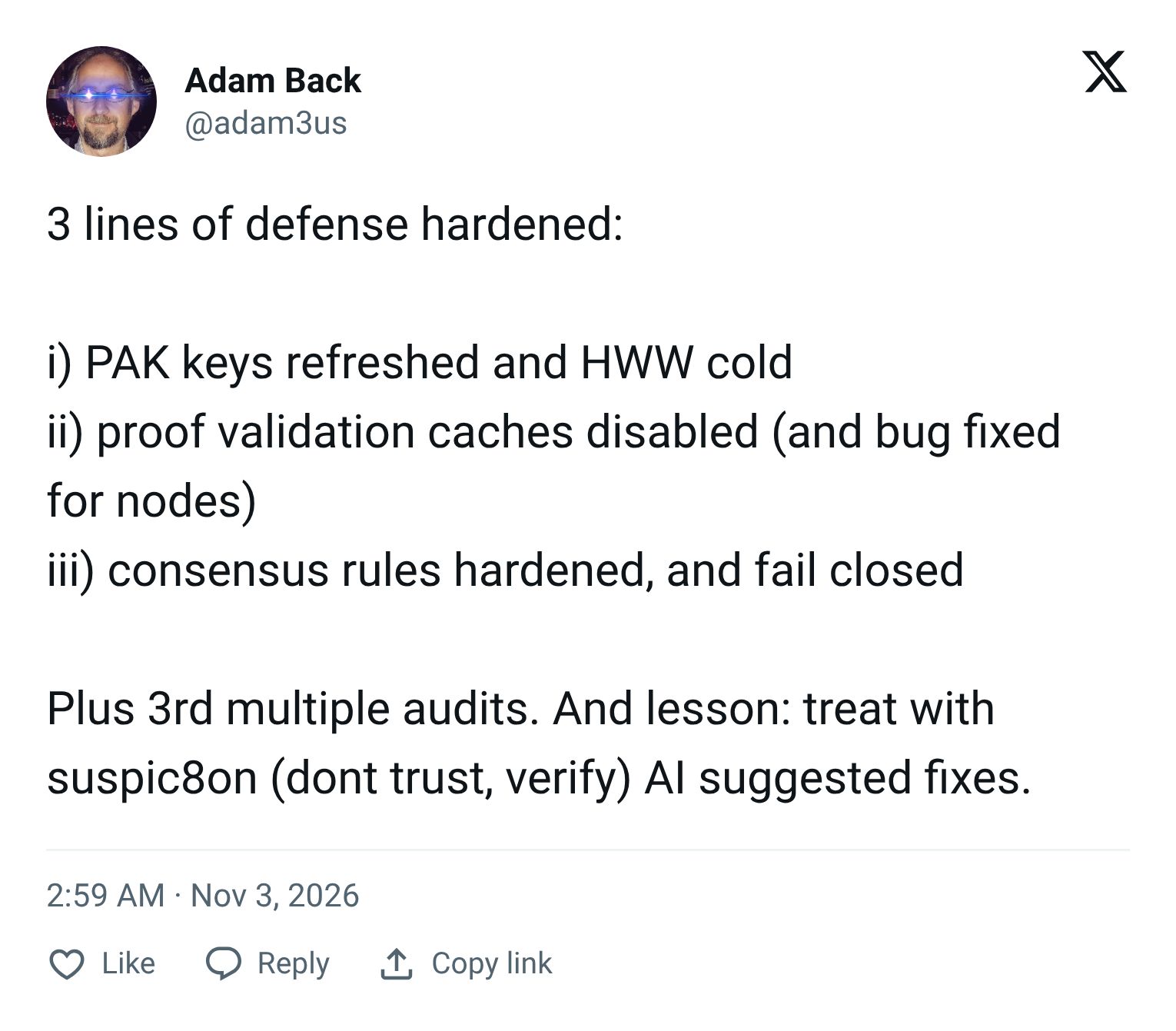
Back also warned developers not to blindly trust solutions suggested by artificial intelligence.
"Treat with suspicion (don't trust, verify) AI suggested fixes," he wrote on X.


