
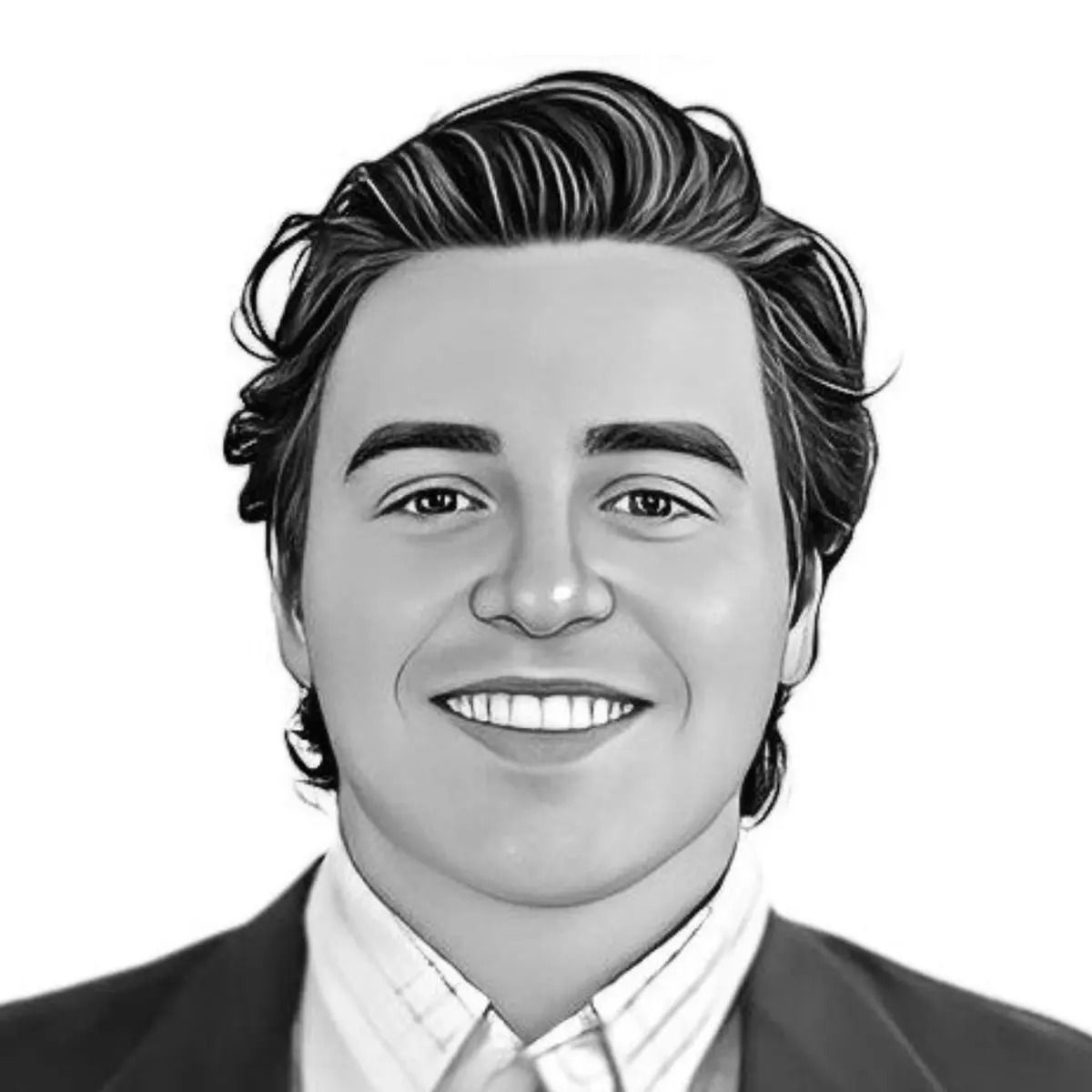

Michael Atwood did not start his career thinking he would help turn small businesses into bitcoin faucets. He was a travel nurse, rotating through trauma and cardiac ICUs, watching a health care system groan under bad incentives and bloated billing. Then Bitcoin crashed into his life and refused to leave.
His entry point was familiar. “My Bitcoin journey started in 2017, not knowing what was going on,” he says. “I came into it for the money. I was just drawn to these crazy gains you’re seeing and then I stayed for the hardest money ever.”
The one-two punch of Atlas Shrugged and The Bitcoin Standard did the rest. Price charts gave way to questions about money, incentives, and how entire systems get built on shaky ground.
At the same time, he was stacking sats as a travel nurse and seeing how broken things were on the hospital floor. “I worked as an ICU nurse in trauma, cardiac, and medical units. I saw it all. And I just know that system is irreparably broken.”
Once he connected that feeling to the nature of fiat money, he could not go back to “normal work” and pretend it was fine. He found himself at his job thinking about Bitcoin, listening to Bitcoin podcasts, trying to figure out how to contribute.
Eventually the tension snapped. In 2020, he quit. “I was spending 3 days a week at the hospital, and 7 days a week thinking about Bitcoin and how I could contribute to the space. So then I finally decided, if not me, then who?”
That decision became Oshi.
People often assume Oshi began as a plain Bitcoin payments company. Michael insists that was never the real heart of it. “The rewards element was always our bread and butter,” he explains.
From day one he was fixated on incentives, especially on how to make it feel worthwhile for normal people to change their habits. The first version of Oshi was a hyper local app for brick and mortar shops. If a merchant accepted bitcoin, they could join, create promotions like “30 percent back in bitcoin,” and Bitcoiners could discover them in the app and on a map.
On the merchant side, Michael’s pitch was easy. No chargebacks, instant low fee settlement, optional auto conversion to cash, and upside if they held the bitcoin. That part never bothered him. “It makes perfect sense for merchants. Always has. It’s just how easy is it?” The real problem was the other side of the counter.
He found that out the hard way. Michael went door to door in places like Redding, California and later Austin, Texas, onboarding businesses himself. He would sit with owners, get them set up with their preferred Lightning service, tie it into Oshi through an API, and walk them through accepting bitcoin.
If he could get time with the owner, they usually said yes. The friction was not there. The friction was in the people walking through the door.
“We realized that at that point there was just no way there were enough customers willing to pay in bitcoin in a local area where these businesses were existing,” he says. Even when Oshi pulled off big local pushes, it did not change the long-term picture.
In one well known event on Rainey Street in Austin, Oshi and the local Bitcoin crowd lined up about twenty five businesses and turned the neighborhood into a kind of live Bitcoin mall for a night. Several hundred people showed up. Michael remembers around six hundred unique Bitcoin purchases flowing through in a single evening. It was a proof of concept that felt electric.

Bitcoin Block party in Austin
Then the event ended. Regular life resumed. Most of those same businesses saw only a handful of Bitcoin payments in a normal week. It was nice marketing, not real, durable revenue.
That pattern pushed Michael to think more deeply about habit. He started studying the history of payment methods and kept coming back to a quiet example on almost every iPhone: Apple Pay. The product had everything in its favor. Same currency. Same cards. A smoother experience than swiping or inserting. Hardware in people’s pockets by default. Yet in the United States usage stayed tiny for years.
“I just only started using Apple Pay a couple years ago and I was like, ‘Why haven’t I been using this the whole time?’” Even then, cashiers would sometimes tell him it did not work, while he was literally tapping and paying in front of them. For a long stretch, less than a small slice of commerce ran through Apple Pay, despite the obvious improvement.
That was his wake up call. If people are that slow to move from swiping to tapping, in the same currency, with the same banks, then asking them to learn about Bitcoin, download a new wallet, and scan QR codes is an even bigger leap. “Human behavior is a b**** to change.” Incentives matter, but stubborn habits sit on the other side of the scale.
The bear market forced the next shift. As prices fell, even hardcore Bitcoiners became more reluctant to part with sats at the point of sale. Local volume thinned out. Oshi had an interesting product and some good stories, but not the engine Michael wanted. So the team went back to basics and rephrased the problem.
What if nobody had to pay in bitcoin at all, yet people still ended up using Bitcoin, and merchants still got real value?
The answer was to flip the flow from spending to earning. Instead of “pay with Bitcoin here,” the new Oshi let customers pay however they already do and earn bitcoin on top.
The plug in stack grew around that idea. Square, Shopify, WooCommerce, Stripe, Zaprite, and others let Oshi watch purchases and reward customers in sats. Merchants can appear on an Oshi marketplace map, so Bitcoiners can seek them out, but the core loop is simple: buy normal goods, earn bitcoin, come back again.
The rewards can stack with whatever card people already use. Michael describes one example:
“You can use your Gemini credit card or Fold credit card at an Oshi enabled business and maybe they will give you 10 percent back on your first purchase. You get 3 percent back from your payment method and then you get the Oshi reward on top of that. It depends on what the business has set up.”
In other words, you keep your old habits and Oshi slides sats under them.
Behind that there is a quiet economic correction going on. Michael likes to talk about “the reappropriation of the excessive economic rents of payment processing fees.”
Card networks take something like 3 percent out of each sale. Prices drift up across the market to cover it. Then cards hand back a portion as points and sell it as a gift. “They’re taking 3 percent out of your back pocket and giving it back to you,” he says.
With Oshi, merchants decide what to give out in bitcoin, regardless of the card program. They can pull part of what would have gone into generic reward points and cut customers in with something that feels real. In the process, they earn more loyal customers, higher average order value, and access to a Bitcoin-native demographic that cares about where they shop.
The bigger picture in Michael’s mind is even simpler. He wants every small business to act like a modern bitcoin faucet. The first faucets on the early web may have given away over twenty thousand coins in total. At the time, the value was low enough that you could hand it out to curious tinkerers without thinking. That cohort played with the tech, learned how it worked, and planted the seeds of a movement that still runs today.
Now the same spirit can show up inside normal commerce. The numbers are already surprising. Michael mentions that one Oshi merchant has given out more U.S. dollar value in bitcoin rewards than a famous early faucet did in its entire life. And now the recipients are not all cypherpunks.
He tells the story of a seventy five year old man who opened a support ticket.
“He’s like, ‘Hey, what can I do with this?’ I told him, ‘You can actually redeem it right back with the business that gave it to you. You have 30 bucks of bitcoin, man.’”
Michael walked him through tapping a couple of buttons so he could spend it on real goods from the same shop. “He doesn’t care about lightning channels or nodes, he just knows that he earned value and he spent it on something real back with the business he got it from. And that’s adoption.”
These are people who, on paper, should never touch bitcoin at all. Yet they are now spending sats and learning, not out of ideology, but because they got something of value and saw it work. Meanwhile, many Bitcoiners hesitate to part with their coins, while these new users happily trade rewards for discounts and free products. It is a strange but useful twist.
Under the hood, Oshi itself runs with a small team plus a new set of tools. For years it was just Michael and his co-founder. He did not write code. Half a year ago you could have sent him a few lines and he would have had no idea what it did.
Today, that has changed. “In the past six or eight months, I personally built, with oversight from people that really know how to read code, many different Oshi features.” That includes new web apps, processes that connect to their APIs, and more.
He went, in his words, “from not being able to do it at all to being able to pump out a new feature a week.” He credits modern AI coding tools for that jump. They let a three person team keep pace with loyalty platforms that employ hundreds.
The final piece in this story is how Oshi fits beside big players like Square and Cash App rolling out Lightning payments. Michael has been dreaming about that combination for years. “Truly the dream stack,” he calls it. The fact that a major payments company now flips a switch and gives merchants instant bitcoin acceptance inside tools they already use is huge.
At the same time, the lesson from his own work still stands. The largest headwind sits in human habit, not merchant terminals. Even with perfect UX and massive reach, people do not just wake up one morning and flip their spending habits.
So while Square and Cash App punch a huge hole in the technical wall, Michael is focused on a simpler gateway. Pay how you already pay. Earn bitcoin for it. Come back again.
That is what Oshi now offers to merchants. A simple way to fold Bitcoin into their business, lift revenue today, and put new money into their customers’ hands without friction. No lectures. No monetary theory. Just sats back on the stuff people already buy.
And when Square and Cash App normalize tapping to pay with Bitcoin, these tiny early earnings become the spark that turns a casual rewards user into someone who actually spends bitcoin in the wild.
Underneath it all is the same energy that pushed a travel nurse out of the ICU and into door to door Bitcoin evangelism. Michael saw systems that were broken, found money that made more sense to him, and then tried to build a bridge between that money and the daily life of regular people.
Oshi is that bridge in its latest form, an attempt to turn every checkout counter into a small, steady bitcoin faucet, and to let loyalty mean something you can take with you long after the points expire.

100% of the Sats go directly to the author


